 EN / INR
 English (US)
Alphabet Learning for Kids – Easy A to Z Guide for Preschool & Nursery
Learn the best ways to teach the English alphabet to preschool and nursery children. Discover simple activities, learning tips, and printable worksheet ideas for parents and teachers.
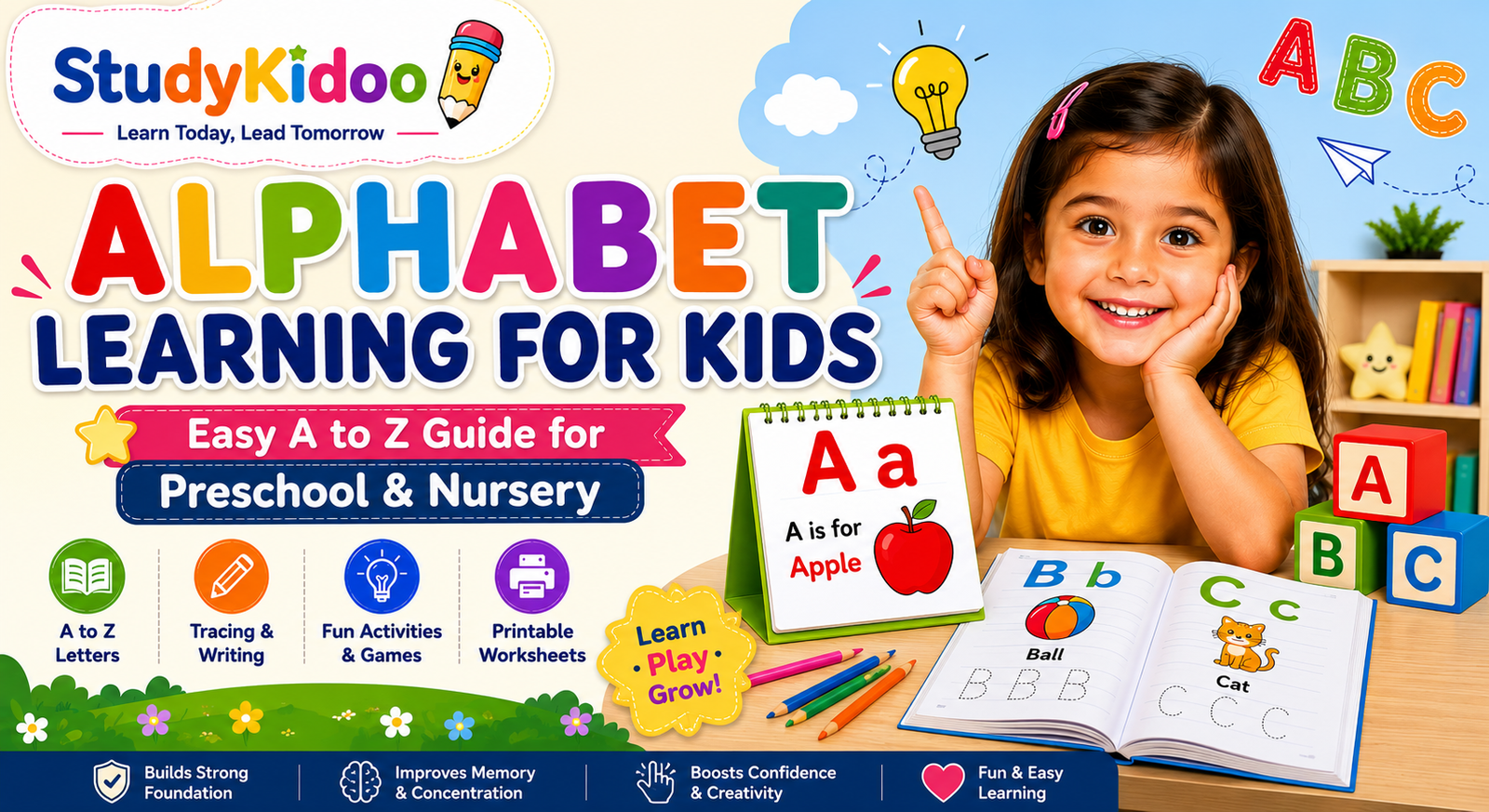
Alphabet learning is the primary step in a child's learning education. As we all know, before children start reading words or making simple sentences, they first need to learn the English alphabet from A to Z. This helps your children to build strong reading and writing skills. Help your child master the English alphabet with this easy Alphabet Learning for Kids guide.
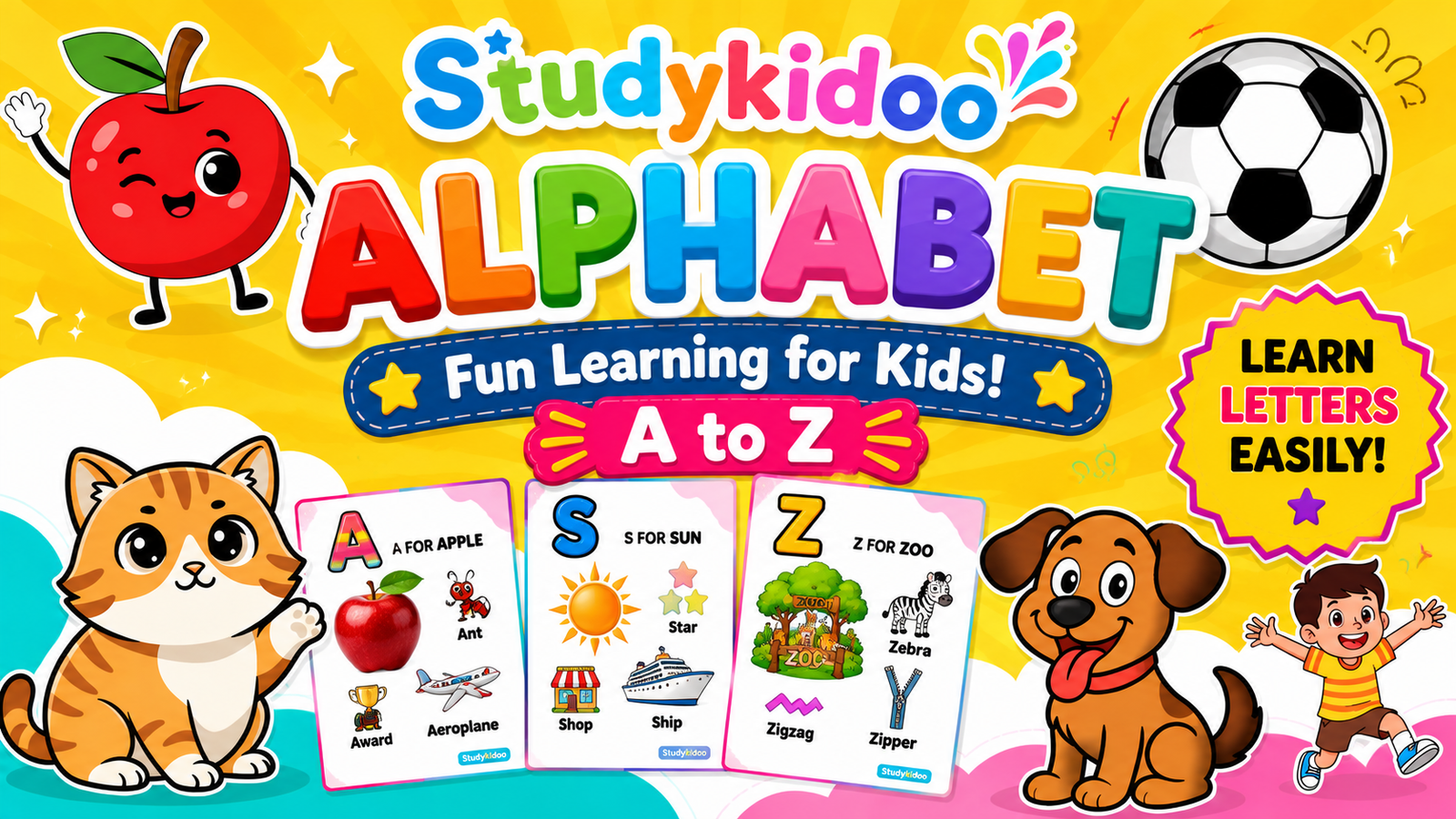
Nursery Alphabet Learning PDF Book | A to Z Printable Worksheets | StudyKidoo
Moreover, we know that every child has their own learning ability. Some children remember letters or the alphabet quickly, while others need more time to learn.
But the best way to teach the alphabet to your kid is to keep learning simple, fun, and more enjoyable. However, parents and teachers do not need expensive learning materials. So daily practice with books, games, songs, and printable worksheets can help children learn successfully.
In this guide, parents and teachers will know simple teaching methods, activities, and worksheets and what common mistakes they should avoid. Moreover, they will know how printable worksheets can boost their child's learning journey.
What is Alphabet Learning?
Alphabet learning means helping your children to recognize, understand, and start writing the 26 English letters. Children first learn to identify letters such as A, B, C, D, and so on; then they learn their phonic sounds, and finally they start using them to read and write simple words.
Why is English Alphabet Learning Important?
A child who knows the alphabet has a better chance of becoming a confident reader and writer.
Alphabet learning helps children:
-
To recognize uppercase and lowercase letters.
-
Improve their memory and concentration.
-
Build strong reading skills.
-
Develop handwriting.
-
Improve fine motor skills.
-
Increase their confidence in school.
-
Start learning new words faster.
-
Prepare for phonics and spelling lessons.
Children who practice regularly often find learning much easier when they begin formal schooling.
When Should Children Learn the Alphabet?
Most children start learning letters between 3 and 5 years of age.
This usually includes the following:
-
Preschool
-
Nursery
-
LKG
-
UKG
-
Kindergarten
At this age, children learn much faster through fun, play, stories, songs, colouring, and hands-on activities worksheets.
Easy Alphabet Learning Activities
1. Teach Only One Alphabet at a Time
Instead of teaching all 26 English letters together, a parent or teacher should teach only one or two alphabets per day.
2. Always use alphabet songs.
The alphabet song is one of the easiest ways to teach children the order of the letters. Singing ABCD together makes learning more enjoyable.
3. Daily practice letter tracing
Tracing will help children improve pencil control and handwriting skill. Encourage your child to trace both uppercase and lowercase letters, but do not force them if they are not interested.
4. Use Worksheets or Pictures
Children learn the alphabet much faster if they connect with objects. For example:
A is for Apple, B is for Ball, C is for Cat, D is for Dog and E is for Elephant.
Parents should show a real apple or pictures to make lessons more interesting and help children build vocabulary.
Nursery Alphabet Learning PDF Book | A to Z Printable Worksheets | StudyKidoo
5. Alphabet Coloring
This coloring alphabets method is best for keeping children engaged and interested while helping them recognize English alphabets through repeated exposure.
6. Letter Matching
Match letters with pictures or words beginning with the same sound.
For example:
-
A → Apple
-
B → Ball
-
C → Cat
This simple worksheet activity will boost kid vocabulary and phonics skills.
English Alphabet (A to Z)
| Letter | Word | Picture Idea |
| A | Apple | 🍎 |
| B | Ball | ⚽ |
| C | Cat | 🐱 |
| D | Dog | 🐶 |
| E | Elephant | 🐘 |
| F | Fish | 🐟 |
| G | Grapes | 🍇 |
| H | Hat | 🎩 |
| I | Ice Cream | 🍦 |
| J | Juice | 🧃 |
| K | Kite | 🪁 |
| L | Lion | 🦁 |
| M | Mango | 🥭 |
| N | Nest | 🪺 |
| O | Orange | 🍊 |
| P | Parrot | 🦜 |
| Q | Queen | 👑 |
| R | Rabbit | 🐰 |
| S | Sun | ☀️ |
| T | Tiger | 🐯 |
| U | Umbrella | ☂️ |
| V | Van | 🚐 |
| W | Watch | ⌚ |
| X | Xylophone | 🎼 |
| Y | Yak | 🦬 |
| Z | Zebra | 🦓 |
Encourage your child to say each letter clear and aloud while pointing to the matching picture. Moreover, repeating this activity daily will improve your kids memory and pronunciation.
Tips for Parents
Children learn best when they are free and interested through encouragement and repetitive action. However, always keep learning sessions short and enjoyable.
Here are some helpful tips:
-
Practise daily for at least 10 to 15 minutes.
-
Clap or appreciate every small achievement.
-
Use colourful picture books and worksheets.
-
Read the alphabet and ask your kid to repeat aloud.
-
Repeat letters during everyday activities.
-
Avoid pressuring your child to learn quickly.
What Common Mistakes to Avoid
Many children need more time to learn the alphabet. So parents or teachers should avoid these common mistakes:
-
Teaching too many letters at once will confuse kids.
-
Focusing only on memorization.
-
Skipping letter sounds
-
Comparing a child with others
-
Using long learning classes.
Remember that every child has their own learning ability.
Frequently Asked Questions
What age should children start learning the alphabet?
Most children begin recognizing letters between 2 and 4 years old, while preschool and nursery children typically start learning letter names, phonic sounds, and simple writing practice.
Should children learn uppercase or lowercase letters first?
Many teachers introduce uppercase letters first because they are easier to recognize, then gradually they try to teach lowercase letters as children become more confident.
How long should alphabet practice last each day?
According to my view, about 10 to 15 minutes is usually enough for preschool children for daily practice.
What is the best way to teach alphabet sounds?
Try to use simple words that begin with each letter, such as A for "apple" or B for "ball," and repeat the sounds in a form of songs, stories, and everyday conversations.
Why are Studykidoo printable worksheets useful?
Studykidoo worksheets provide structured practice for tracing, letter recognition, matching, and handwriting practice, helping children build confidence through repetition.
Final Thoughts
Alphabet learning is the first step toward child development related to reading, writing, and learning. Moreover, with regular practice children will soon recognize all 26 English letters and be ready for the next stage of their learning adventure.


Comments (0)
No comments yet. Be the first to comment!